
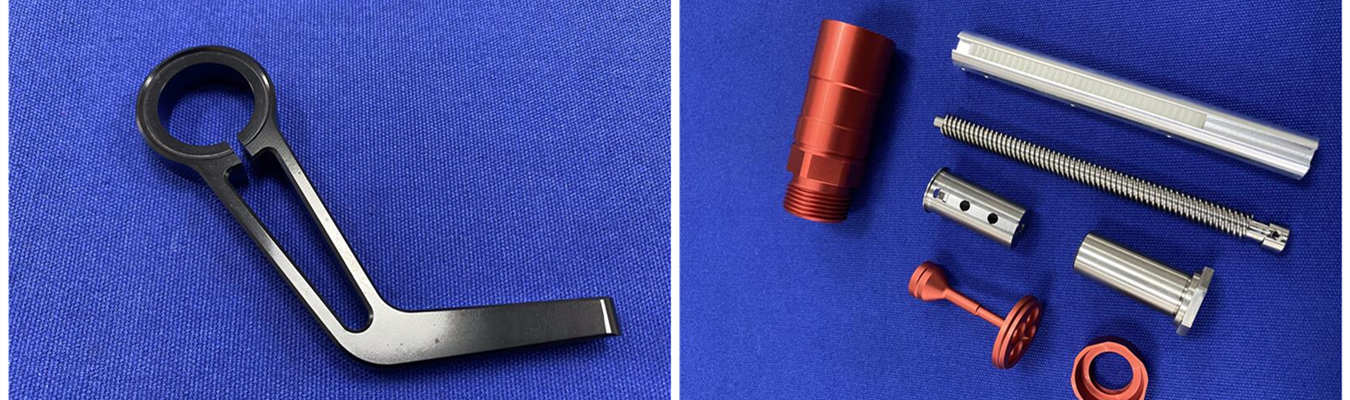
The automotive industry is changing faster than ever. Electric vehicles, lightweight materials, autonomous driving systems, and stricter efficiency standards are pushing manufacturers to rethink how automotive components are designed and produced.
Behind many of these advancements is a manufacturing process that most consumers never notice: precision CNC machining.
While modern vehicles appear increasingly digital on the surface, their reliability still depends heavily on accurately manufactured mechanical components. From transmission systems and steering assemblies to EV battery housings and sensor mounts, precision manufacturing has become a critical part of automotive innovation.
As vehicle technology evolves, automotive manufacturers are placing greater emphasis on machining accuracy, repeatability, and production efficiency.
The Growing Demand for Precision in Automotive Parts
Traditional automotive manufacturing focused heavily on mass production. Today, manufacturers must balance high-volume production with increasingly complex engineering requirements.
Modern vehicles now include:
Lightweight structural components
Complex aluminum assemblies
Precision electronic housings
High-performance drivetrain parts
Advanced braking systems
Sensor-integrated mechanical components
These parts often require tight tolerances and consistent dimensional stability to ensure proper assembly and long-term performance.
Even small deviations in machining quality can affect vibration control, fuel efficiency, thermal performance, or overall vehicle reliability.
This is especially important in electric vehicles, where compact packaging and thermal management systems require highly accurate component production.
Why CNC Machining Plays a Critical Role
CNC machining has become one of the most reliable manufacturing solutions for producing precision automotive components.
Unlike traditional manual machining, CNC systems allow manufacturers to achieve repeatable accuracy across large production runs while maintaining consistent quality standards.
Automotive manufacturers increasingly rely on advanced machining technologies for:
Engine components
Suspension parts
Steering system components
EV battery structures
Precision brackets
Sensor housings
Transmission assemblies
Modern machining centers also improve manufacturing flexibility, allowing suppliers to adapt more quickly to design changes and shorter development cycles.
This flexibility is becoming increasingly valuable as automotive companies accelerate product innovation and reduce time-to-market expectations.
The Rise of 5-Axis Machining in Automotive Manufacturing
One of the biggest manufacturing trends in recent years has been the growing use of multi-axis machining technologies.
Traditional 3-axis systems remain effective for simpler geometries, but modern automotive components often require more complex machining operations.
5-axis machining allows manufacturers to process intricate surfaces and complex geometries with fewer setups and improved precision.
This technology is especially valuable for:
EV powertrain components
Turbocharger housings
Lightweight aluminum structures
Complex brackets
Precision prototype parts
Manufacturers using advanced 5-axis CNC automotive machining technologies can often reduce production time while improving dimensional consistency and surface quality.
The ability to machine multiple surfaces in a single setup also helps minimize alignment errors and improve repeatability.
Material Challenges in Modern Automotive Production
Another major trend affecting automotive manufacturing is the increasing use of advanced materials.
Automotive companies are aggressively reducing vehicle weight to improve fuel economy and EV efficiency. As a result, manufacturers now work with a broader range of materials than ever before.
Common automotive machining materials include:
Aluminum alloys
Stainless steel
Titanium
Brass
Engineering plastics
High-strength steel alloys
Each material introduces unique machining challenges related to heat generation, cutting stability, surface finish, and tool wear.
For example, lightweight aluminum parts often require careful machining strategies to maintain structural integrity and dimensional accuracy.
At the same time, high-strength steel components may require advanced tooling and optimized cutting parameters to maintain efficiency during production.
This is why engineering support and process optimization have become increasingly important within automotive supply chains.
Quality Control Is Becoming More Important
As vehicle systems become more advanced, automotive manufacturers are placing greater emphasis on quality consistency and traceability.
Precision inspection systems, automated measurement technologies, and process monitoring are now standard requirements across many automotive production environments.
Manufacturers are expected to deliver not only dimensional accuracy, but also:
Stable production repeatability
Material traceability
Process consistency
Reliable lead times
Scalable production capability
This shift is pushing machining suppliers to invest in smarter manufacturing systems and more advanced quality management processes.
Suppliers capable of maintaining consistent tolerances while scaling production efficiently are becoming increasingly valuable within the automotive industry.
The Future of Automotive Manufacturing
The future of automotive production will depend heavily on advanced manufacturing technologies.
Electric vehicles, intelligent driving systems, and lightweight engineering trends are reshaping the entire supply chain.
As automotive components become smaller, lighter, and more complex, precision machining will continue playing a larger role in vehicle development and production.
Manufacturers that combine engineering expertise, advanced CNC capability, and stable quality control processes will be better positioned to support the next generation of automotive innovation.
For companies sourcing precision automotive components, understanding machining capability is no longer optional. It has become an essential part of ensuring product performance, production reliability, and long-term manufacturing success.
Engineers and sourcing teams looking to better understand machining processes, tolerances, and automotive component manufacturing considerations can also reference this detailed CNC machining automotive parts for additional technical insight.