
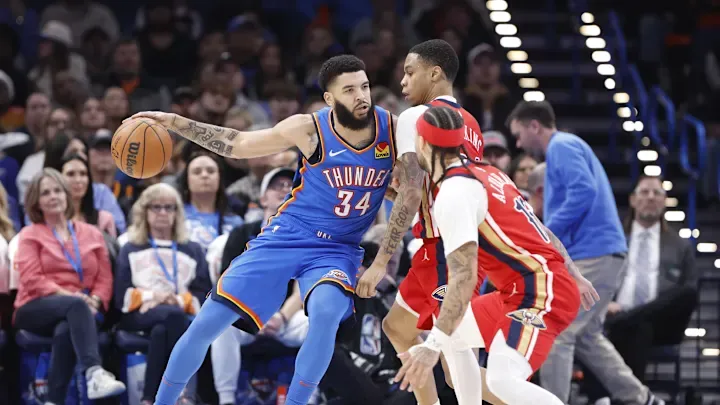
okc thunder vs new orleans pelicans match player stats are the kind of numbers fans don’t just “check”… they study. Because when OKC meets New Orleans, it’s not only about who wins—it’s about who takes control, who stays calm in pressure, and who quietly flips the game without even making headlines.
This matchup always feels like a playoff-style test, even if it’s a regular season night. The pace is fast, the defense is physical, and every possession looks like it matters. And if you’ve ever watched this game with friends, you already know what happens next: someone grabs their phone and starts reading stats like they’re decoding a mystery.
In this detailed guest post, we’ll break down the player performances in a way that’s easy to understand, fun to read, and genuinely useful for fans, fantasy players, and anyone who loves NBA analysis.
Why This Matchup Feels Bigger Than a Normal Game
OKC and the Pelicans aren’t just two teams battling for points. They’re fighting for identity.
The Thunder represent that fearless, young-core energy. They play like they’re not supposed to be here yet, but they’re here anyway. They trust their ball movement, their spacing, and their ability to hit big shots late.
The Pelicans, on the other hand, bring power and versatility. They’re built to punish mistakes. They can beat you with size, athleticism, and mismatches that force defenders into uncomfortable decisions.
That contrast makes every quarter feel like a chess match… except the pieces are sprinting at full speed.
Reading Match Player Stats the Smart Way (Not Just Box Score Watching)
Before we jump into individual performances, here’s something most people miss: stats aren’t only about totals.
A player can score 18 points and still be the most important person on the floor. Another guy can drop 28 and still be a negative if he gave up too much on defense or stalled the offense.
The best way to understand okc thunder vs new orleans pelicans match player stats is by looking at:
Minutes played and role responsibility
Efficiency (shots made vs shots taken)
Assists compared to turnovers
Rebounding impact, especially in tight games
Defensive pressure and matchup difficulty
When you watch the game and then look at the numbers, the story becomes clear.
OKC Thunder: Player Performances That Shaped the Game
OKC usually wins games with rhythm. When their main creators are comfortable, the whole offense flows. But against New Orleans, that comfort has to be earned.
Shai Gilgeous-Alexander’s Impact Beyond Points
Shai’s game is almost unfair when he’s locked in. He doesn’t just score—he bends defenses. The Pelicans can throw length at him, crowd the paint, and try to cut off his driving angles… but he’s one of the best in the league at staying patient.
In matchups like this, Shai’s biggest value is how he forces help defenders to step in. Once that happens, OKC’s shooters get cleaner looks, and the offense suddenly looks easy.
Even when his shot isn’t falling early, he keeps getting to his spots. That’s what superstars do. They don’t panic. They keep applying pressure until the defense breaks.
Jalen Williams: The “Glue Star” OKC Needed
Jalen Williams is the kind of player casual fans underestimate until he cooks their team.
His stat line usually looks balanced—points, rebounds, assists—but the real story is how he connects everything. He’s quick enough to attack closeouts and strong enough to finish through contact.
Against New Orleans, that matters because the Pelicans defend hard and recover fast. If you hesitate, the window closes. Jalen doesn’t hesitate.
He also helps OKC survive those stretches when Shai sits. That’s a huge deal in games where the bench minutes can decide everything.
Chet Holmgren vs Pelicans Size: A Real Test
Chet’s presence changes OKC’s defense instantly. But the Pelicans are one of those teams that can challenge him physically.
This matchup is about timing and positioning. Chet doesn’t always win with brute strength, but he wins with smart angles and elite instincts.
If he’s hitting jumpers, it becomes a nightmare for the Pelicans’ bigs because they can’t just camp in the paint. They have to step out, and that opens driving lanes.
On defense, his rim protection forces New Orleans to think twice before attacking. And when a team starts thinking instead of reacting, the offense slows down.
Thunder Role Players: The Hidden Story in the Stats
OKC’s bench and role players often decide the “swing moments.”
There’s usually a stretch where someone like Lu Dort changes the energy with physical defense, or a shooter gets hot for three minutes and forces a timeout.
These moments don’t always show up as highlights, but they show up in the plus-minus, the momentum, and the way the other team starts rushing.
That’s why looking deeper than points matters.
New Orleans Pelicans: Player Stats That Tell the Real Story
The Pelicans have one of the most interesting rosters in the league because they can win games in multiple ways.
Sometimes it’s Zion overpowering everyone. Sometimes it’s Brandon Ingram cooking from mid-range. Sometimes it’s CJ hitting back-breaking threes. And when their defense is active, they can look unstoppable.
Zion Williamson: When Efficiency Becomes Dominance
Zion doesn’t need 25 shots to dominate. That’s what makes him scary.
When he attacks downhill, defenders have two bad choices: foul him or let him finish. And even if the defense collapses, Zion’s passing has improved enough to punish double teams.
The biggest thing to watch in Zion’s stat line isn’t just points. It’s free throws attempted, paint touches, and how many defenders he forced into help position.
If Zion’s pressure is constant, OKC’s defense has to rotate more, and rotations create openings.
Brandon Ingram: The Smooth Scorer Who Controls Tempo
Ingram’s style is calm, controlled, and sometimes frustrating for opponents because he can get a clean look whenever he wants.
Against OKC, his mid-range game becomes important because the Thunder often try to protect the rim while still chasing shooters. That space around the free-throw line is where Ingram thrives.
His stats often reflect that: efficient scoring, steady assists, and a sense that he’s always in control.
And when games tighten late, having a player who can create a shot without chaos is priceless.
CJ McCollum: The Shot-Maker in Momentum Moments
CJ is one of those players who can flip the vibe of the arena in seconds.
Maybe he’s quiet for a quarter. Then he hits two threes, draws a foul, and suddenly the Pelicans are on a run. That’s why his stats often look “streaky,” but his impact is huge.
The real key is whether he’s also contributing playmaking and limiting turnovers. When CJ balances scoring with smart decisions, New Orleans becomes extremely hard to beat.
Pelicans Role Players: Defense, Hustle, and Extra Possessions
New Orleans often wins the “effort stats” when they’re locked in.
Deflections, offensive rebounds, second-chance points—those are the things that don’t always jump off the screen but show up in the final result.
Players like Herb Jones can change the game without scoring much. A couple of steals, a few stops, one big transition play… and suddenly the opponent is uncomfortable.
That’s what elite role players do.
okc thunder vs new orleans pelicans match player stats: Who Won the Key Battles?
This game usually comes down to a few major battles that decide everything.
Battle 1: Star Creation vs Defensive Discipline
OKC’s offense relies heavily on smart creation—getting defenders to shift, then punishing the gap.
New Orleans tries to stay disciplined and physical, forcing tougher shots and limiting easy drives.
If Shai and Jalen are getting to the rim freely, OKC usually controls the game. If the Pelicans keep them out of the paint and force contested jumpers, New Orleans gains the advantage.
Battle 2: Paint Scoring vs Perimeter Shooting
The Pelicans love scoring in the paint. OKC loves spacing and threes.
So the question becomes: which style wins on that night?
If OKC’s shooters hit early, the Pelicans have to stretch their defense. That opens lanes for drives and makes the Thunder offense look unstoppable.
If OKC misses and the Pelicans get rebounds, New Orleans can run in transition and turn the game into a physical battle.
Battle 3: Turnovers and Transition Points
This is one of the biggest stat categories in games like this.
Turnovers don’t just waste possessions—they create easy points the other way. And easy points are deadly because they boost confidence and energy.
If OKC keeps turnovers low, they force New Orleans into half-court execution. That favors OKC’s defensive structure.
If the Pelicans force turnovers, they get Zion and their athletes running downhill, and that’s a scary sight.
The “Clutch” Factor: Who Delivered When It Got Tight?
In close games, the box score becomes a drama script.
The last five minutes are where player stats turn into legacy moments—whether it’s a step-back jumper, a chasedown block, or a rebound that saves the possession.
OKC often relies on Shai’s calm shot creation. He’s one of the best late-game scorers because he doesn’t rush. He gets to the line, hits tough shots, and keeps the offense organized.
New Orleans often leans on Zion’s pressure or Ingram’s shot-making, depending on matchups. If the defense collapses on Zion, shooters get chances. If the defense stays home, Zion finishes.
The clutch winner is usually the team that makes fewer mistakes, not the team that makes the flashiest shot.
okc thunder vs new orleans pelicans match player stats: What the Numbers Say About Team Identity
This is where stats become more than stats.
When you look at okc thunder vs new orleans pelicans match player stats, you start noticing patterns that match each team’s personality.
OKC’s best games usually feature:
High assists and smooth ball movement
Multiple players scoring efficiently
Strong late-game execution
Active defense without fouling too much
New Orleans’ best games usually feature:
Paint dominance and free throw pressure
Strong rebounding control
Defensive playmaking (steals, blocks, deflections)
A second scorer stepping up beside the main star
That’s why this matchup is so fun. The numbers don’t just tell you who played well—they tell you who stayed true to their style.
Real Fan Moment: Why People Obsess Over These Stats
If you’ve ever watched this matchup with a friend who “doesn’t care about stats,” you’ve seen the funniest transformation.
First quarter: “I’m just watching for fun.”
Second quarter: “How many fouls does Zion have?”
Third quarter: “What’s Shai shooting from the field?”
Fourth quarter: “Bro check the rebounds, we’re losing the glass!”
That’s what great matchups do. They pull you in.
And the reason fans search for okc thunder vs new orleans pelicans match player stats is simple: the game feels important, and the performances feel meaningful.
The Most Reliable Way to Judge Player Performance (Even Without Watching Full Game)
Sometimes you miss the match. It happens.
But if you want to understand who truly played well, focus on these stat signals:
Efficiency over volume
Assist-to-turnover ratio
Rebounds in a close game
Free throws earned by attacking
Defensive impact through matchup difficulty
This is how you spot the difference between “a good box score” and “a winning performance.”
And yes—this is exactly why okc thunder vs new orleans pelicans match player stats trend so hard after every matchup.
okc thunder vs new orleans pelicans match player stats: What Fantasy and Betting Fans Usually Look For
Even if you’re not a hardcore fantasy player, it’s impossible to ignore how much these games affect player trends.
Shai’s usage and free throw volume matter.
Zion’s paint touches and foul pressure matter.
Ingram’s shot attempts matter.
CJ’s three-point volume matters.
Chet’s blocks and rebounds matter.
These matchups are often “stat-friendly,” but only for players who control their roles. The ones who hesitate usually disappear, because the pace and pressure are too intense.
That’s why fans don’t just ask “who scored the most?” They ask who controlled the game?
The One Stat That Quietly Decides This Matchup
If you want one stat that almost always predicts the winner, it’s this:
Second-chance opportunities.
When New Orleans wins the offensive rebound battle, they create extra possessions and force OKC into a more physical game.
When OKC cleans the glass and runs, they control tempo and force the Pelicans into chasing shooters.
It’s not the flashiest stat, but it’s the one coaches obsess over.
The Bigger Picture: What This Matchup Means Moving Forward
This matchup isn’t just entertaining—it’s a measuring stick.
For OKC, it shows whether their young core can handle physical teams that don’t give away easy points.
For New Orleans, it shows whether they can stay consistent and disciplined against a fast, modern offense built on spacing and decision-making.
Either way, games like this reveal what each team needs before playoff basketball arrives.
And that’s why okc thunder vs new orleans pelicans match player stats aren’t just searched for curiosity—they’re searched because they tell you what’s real.
Read also:
Lakers vs Brooklyn Nets Match Player Stats – Epic Breakdown