
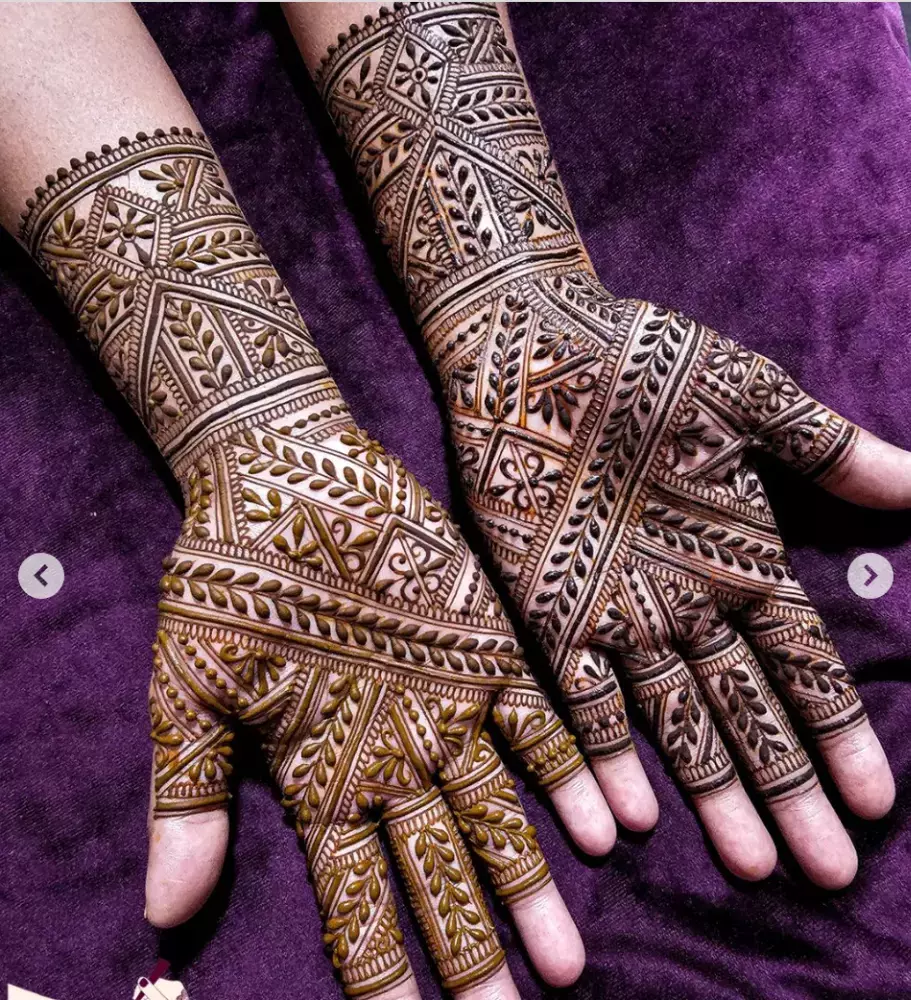
Moroccan Pattern Mehndi offers a refreshing departure from the traditional swirls and floral motifs that many associate with henna art, focusing instead on sharp lines and architectural symmetry. If you have ever walked through the narrow, vibrant alleys of Marrakesh, you have likely noticed the intricate tile work known as zellij that adorns the walls of riads and mosques. This geometric brilliance is exactly what inspires this specific style of body art. It is a form of expression that speaks to those who find beauty in structure and mathematical precision. Unlike the flowing, organic shapes found in Indian or Arabic styles, this North African tradition embraces the power of the grid, the diamond, and the perfect square.
When I first encountered a professional henna artist working in the heart of Morocco, I was struck by her tool of choice. Rather than the plastic cones common in South Asia, she used a small syringe to exert incredible pressure and control over the henna paste. This allows for the creation of exceptionally straight lines and bold, consistent patterns that look almost like a second skin made of fine lace. The result is a design that feels incredibly modern and contemporary, despite its ancient tribal roots. It is this balance between the old and the new that makes the style so captivating for women across the globe who want something distinctive and chic.
The philosophy behind this art form is deeply rooted in the history of the Berber or Amazigh people. For centuries, these geometric symbols were not just decorative; they were believed to offer protection and bring good luck to the wearer. A single line or a perfectly placed dot could represent a family’s lineage or a prayer for fertility and health. When you choose a Moroccan Pattern Mehndi design, you are essentially wearing a tapestry of history. Each intersection of lines tells a story of survival, culture, and the enduring human desire to decorate the body with meaning and intent.
The Architectural Beauty of Geometric Henna
The defining characteristic of this style is its reliance on geometry to create visual impact. While other henna traditions might use the hand as a canvas for a garden of roses, the Moroccan approach treats the hand like a blueprint. You will often see patterns that follow the natural bones and tendons of the fingers, accentuating the length and grace of the hand without overwhelming it with clutter. This structured look is particularly popular among minimalist brides who want to honor tradition but prefer a clean, graphic aesthetic that matches a modern bridal silhouette.
The use of space is another element where this style shines. In many Moroccan designs, the “negative space”—the bare skin that peeks through the henna—is just as important as the henna itself. By leaving certain areas empty, the artist creates a high-contrast look that makes the dark orange or mahogany stain pop with even more intensity. This technique is often used to create a “glove” effect, where the henna covers the wrist and fingers in a dense geometric mesh, leaving the center of the palm or the back of the hand strikingly bare. It is a masterful play on light and shadow that requires a keen eye for balance and proportion.
Furthermore, the symmetry involved in this work is nothing short of incredible. An expert artist can mirror a complex design from the left hand to the right hand with almost mathematical accuracy. This level of skill takes years to master, as henna is a medium that does not allow for mistakes. Once the paste touches the skin, the dye begins to set. There is no “undo” button in the world of North African body art. This is why the artists who specialize in these patterns are often regarded as the elite of the henna world, possessing a steady hand and a deep understanding of spatial geometry that few others can match.
Historical Roots and Tribal Significance
To truly appreciate the depth of Moroccan Pattern Mehndi, one must look at the Berber tribes of the Atlas Mountains. For these communities, henna was a sacred plant, believed to contain “Barakah” or divine blessing. The patterns were often inspired by the same motifs found in Berber carpets and jewelry. Diamonds were frequently used to represent the eye, intended to ward off the “evil eye” and protect the wearer from misfortune. Zig-zag lines might represent water or the flow of life, while small crosses were thought to deflect bad energy in four different directions.
These tribal tattoos were originally permanent, etched into the skin as a rite of passage for young women. As social norms changed and henna became the preferred temporary alternative, the symbols remained the same. This transition allowed for even more creativity, as artists could experiment with larger and more elaborate compositions on the hands and feet. Even today, during traditional Moroccan weddings, the “Henna Night” is the most important pre-wedding ritual. It is a time for the women of the family to gather, share stories, and bless the bride with intricate patterns that symbolize her transition into a new chapter of life.
The significance of these patterns extends beyond just the bride. In many parts of Morocco, henna is applied during major religious festivals and celebrations. It is a communal art form that brings people together. When you see someone with these geometric patterns, you instantly know they have participated in a moment of joy. The art is a visual language that transcends spoken words, signaling a state of celebration and a connection to the earth through the natural botanical dye of the Lawsonia inermis plant.
Mastering the Geometry of Moroccan Pattern Mehndi
For an artist to succeed in this style, they must think like an architect. The process usually begins with a central anchor point, often at the wrist or the middle of the back of the hand. From this point, the artist builds a grid of thin lines that serve as the foundation for the rest of the design. These lines must be perfectly straight and equidistant to ensure the final pattern looks symmetrical. It is a slow, methodical process that requires immense concentration. Watching a master artist at work is almost like watching a meditation in motion, as they carefully fill in each tiny diamond and square with consistent pressure.
One of the most popular motifs in this style is the “chevrons” or V-shaped patterns that travel up the fingers. These are often combined with delicate dots and thin horizontal bands to create a look that resembles fine jewelry or intricate lace gloves. The precision of these lines is what gives the design its sophisticated edge. Unlike floral styles that can be a bit more forgiving if a petal is slightly larger than another, a geometric design will look “off” if a single line is crooked. This demand for perfection is why many modern henna enthusiasts are gravitating toward this style—it represents a high level of craftsmanship and technical expertise.
Another fascinating aspect of this style is how it adapts to the different parts of the body. While the hands are the most common canvas, the feet are also frequently adorned with geometric patterns. In Morocco, it is common to see a solid “cap” of henna on the heels and the tips of the toes, with intricate geometric lattices climbing up the ankles. This provides a striking contrast between the solid blocks of color and the delicate linework. It is a look that is both grounded and ethereal, perfectly suited for the barefoot elegance of a beach wedding or a traditional desert ceremony.
Why It Is the Preferred Choice for Modern Brides
In the age of social media, where visual impact is everything, the Moroccan Pattern Mehndi has found a massive new audience. Brides today are looking for designs that look great in high-definition photography and stand out against their bridal attire. The bold, clean lines of Moroccan art are exceptionally photogenic. They don’t look like a blurry mass of brown from a distance; instead, the patterns remain clear and distinct, making them a favorite for wedding albums. The style also complements modern jewelry beautifully, acting as a subtle backdrop to gold bangles or diamond rings rather than competing with them.
Many brides also appreciate the unisex appeal of geometric henna. While floral patterns are traditionally seen as more feminine, the sharp, tribal nature of Moroccan art can be easily adapted for men. In many cultures, grooms are increasingly participating in henna ceremonies, and they often opt for a small, geometric symbol on the palm or a band around the wrist. This makes the Moroccan style a versatile choice for a couple that wants to have a cohesive look during their wedding festivities. It is an inclusive art form that celebrates the shared heritage of the couple in a modern way.
Furthermore, the application time for Moroccan designs can often be shorter than for full-coverage Indian designs, depending on the complexity. Because the style relies heavily on open skin and negative space, a skilled artist can create a high-impact look relatively quickly. This is a significant advantage for a busy bride who has a long list of rituals to get through. You get the maximum amount of “wow factor” with a more efficient application process. It is a practical choice for the modern woman who values her time but refuses to sacrifice her aesthetic standards.
The Science of Henna: Sourcing and Safety
As with any form of body art, the quality of the materials used is paramount. To achieve the crisp, dark lines required for Moroccan Pattern Mehndi, the henna paste must be of the highest quality. This starts with the sourcing of the henna powder. The best henna for this style usually comes from the Sojat region of India or the Sahara regions of Morocco, where the heat and soil conditions produce a high lawsone content. The powder should be finely sifted to ensure it doesn’t clog the applicator, whether it is a cone or a syringe.
Expertise in mixing the paste is what separates a professional from an amateur. A true artist will only use natural ingredients: henna powder, lemon juice or water, sugar, and essential oils like lavender or eucalyptus. The essential oils are not just for scent; they contain “terps” that help release the dye and ensure a deep, long-lasting stain. Trustworthiness in this industry is built on this transparency. You should always avoid “Black Henna,” which often contains PPD, a chemical dye used in hair color that can cause severe skin burns and permanent scarring. Natural henna will always start as an orange stain and darken over 48 hours to a rich brown—never jet black.
When you sit for a henna session, you are trusting the artist with your skin. An experienced professional will always ask about your skin sensitivity and provide you with aftercare instructions to ensure your stain reaches its full potential. This level of care is a hallmark of a reputable artist who values their craft and their clients. By educating yourself on the ingredients and the process, you can ensure that your experience with Moroccan henna is not only beautiful but also safe and rewarding.
Essential Aftercare for a Long-Lasting Stain
Once the Moroccan Pattern Mehndi paste has been applied, the work is only half done. The longevity and depth of the stain depend heavily on how you treat it in the first 24 to 48 hours. Traditionally, once the henna begins to dry, a mixture of lemon juice and sugar is dabbed onto the design. The sugar helps the henna stick to the skin longer, while the acidity of the lemon helps the dye penetrate deeper. It is common to see people in Morocco with their hands wrapped in tissue or cloth to keep the warmth in, as heat is a major factor in dye release.
You should aim to keep the paste on your skin for at least six to eight hours, though overnight is ideal for the darkest results. When it is time to remove the paste, never use water. Instead, use a blunt edge like a credit card or your fingernails to gently scrape the dried mud away. Rubbing a bit of coconut oil or olive oil onto the skin can help loosen any stubborn bits. Avoiding water for the first 24 hours after removal is the golden rule. Water interrupts the oxidation process, which is the chemical reaction between the henna dye and the air that turns the stain from bright orange to deep mahogany.
In the days following the application, keeping the skin moisturized is the best way to prevent the design from fading prematurely. As your skin naturally exfoliates, the henna stain will go with it. By using natural oils and avoiding harsh chemical scrubs or chlorine pools, you can keep your geometric patterns looking sharp for up to two weeks. This aftercare routine is a small price to pay for the incredible beauty of the final result. It is a slow, rewarding process that encourages you to take a moment of rest while the art takes hold on your skin.
Styling the Moroccan Pattern Mehndi for Modern Weddings
When it comes to wedding fashion, this style of henna is incredibly versatile. For a bride wearing a traditional kaftan or lehenga, the geometric patterns provide a sophisticated counterpoint to the rich embroidery of the fabric. The sharp lines of the henna can echo the architectural details of the wedding venue, creating a cohesive visual experience. If you are a guest attending a wedding, a small Moroccan-inspired design on the back of the hand can act as a stunning permanent accessory that complements your evening wear without the need for heavy bracelets.
Pairing your henna with jewelry is where you can really have fun. Because Moroccan patterns are so structured, they look amazing with “stacked” rings and dainty gold chains. Many brides choose to leave their knuckles bare of henna to allow their rings to take center stage, while the geometric patterns frame the rest of the hand. This creates a balanced, editorial look that is very popular in modern fashion photography. It is all about creating a curated aesthetic where every element—from the dress to the jewelry to the henna—works together in harmony.
Don’t be afraid to experiment with the placement of the patterns. While the hands are the traditional choice, a geometric design crawling up the forearm or placed between the shoulder blades can be a stunning and unexpected choice for a dress with a low back. The beauty of Moroccan Pattern Mehndi is its ability to adapt to the wearer’s personal style. Whether you want a full-arm “sleeve” of geometric art or a tiny, meaningful symbol on your wrist, the grid-based nature of this style allows for endless customization. It is an art form that invites you to be a part of the design process.
The Future of Fusion: Moroccan Meets Indo-Arabic
As the world becomes more connected, we are seeing a fascinating rise in “Fusion Mehndi,” where the geometric precision of Morocco is mixed with the floral elegance of India and the flowing vines of the Middle East. This hybrid style offers the best of both worlds. Imagine a central Moroccan diamond on the palm, surrounded by delicate Indian “jali” work and flowing Arabic leaves. This cross-pollination of cultures is a beautiful representation of our globalized society, where different traditions come together to create something entirely new and breathtaking.
This fusion style is particularly popular among brides who come from multi-cultural backgrounds. It is a way to honor different parts of their heritage in a single, cohesive design. For artists, this trend is an exciting challenge that requires them to be fluent in multiple “henna languages.” It pushes the boundaries of what is possible with a henna cone, resulting in designs that are increasingly complex and unique. As we look to the future, the popularity of Moroccan-inspired patterns will likely only continue to grow as more people discover the timeless appeal of geometric art.
Whether you are a seasoned henna enthusiast or a newcomer to the art form, the allure of the Moroccan style is undeniable. It is a celebration of math, history, and the natural world, all captured in the temporary stain of a desert plant. By choosing a Moroccan Pattern Mehndi design, you are not just following a trend; you are participating in a living tradition that has traveled across continents and centuries. It is an invitation to see the world—and your own skin—through a lens of symmetry, protection, and unparalleled beauty. The next time you have the opportunity to get henna, consider the power of the line and the strength of the diamond. You might just find that the most structured designs offer the most creative freedom.
aesthetic mehndi designs
instagram stylish full hand mehndi design
cute easy mehndi designs for kids
mehandi designs for wedding
dark mehendi design