
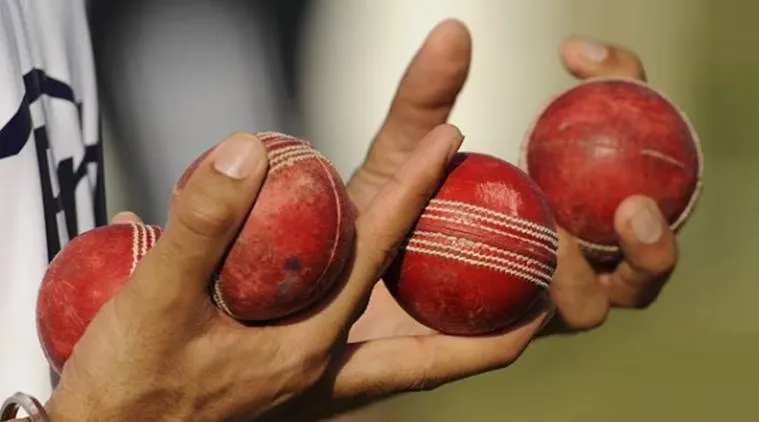
Reverse Swing Magic is a phenomenon that has fascinated cricket fans and terrified opening batters for decades, turning a dull afternoon session on a flat pitch into a theater of high-octane drama. I remember sitting in the stands during a sweltering Test match in the subcontinent, watching as the ball, now forty overs old and scarred by the abrasive surface, began to defy the laws of physics. One moment it was heading toward the middle-and-off stump, and in the blink of an eye, it jagged inward with a sharp, late tail to rattle the timber. That is the essence of the “mystery” that bowlers have spent years trying to master, often in the shadows of the more traditional swing bowling techniques.
The beauty of this art form lies in its counter-intuitive nature, where the ball moves toward the shiny side rather than away from it. To the uninitiated, it looks like a glitch in the game, but to a seasoned fast bowler, it is the highest form of craftsmanship. Conventional swing is relatively easy to understand; you tilt the seam and let the air resistance do the work on a new, shiny ball. However, the reverse version requires a specific set of environmental conditions, a heavily weathered ball, and an almost supernatural level of arm speed. This transition from conventional to reverse is what separates the great bowlers from the legendary ones.
Understanding the history of this technique requires us to look back at the dusty streets of Karachi and Lahore in the late 1970s. For a long time, the cricketing world viewed this phenomenon with suspicion, often associating it with the “dark arts” of ball tampering. Pioneers like Sarfaraz Nawaz and later Imran Khan were among the first to realize that by keeping one side of the ball extremely dry and rough while polishing the other with sweat and saliva, they could achieve a late movement that was impossible to pick from the hand. It was a local secret that eventually conquered the global stage, forever changing the tactical landscape of the five-day game.
The Aerodynamics Behind Reverse Swing Magic
To truly appreciate the mastery involved, we must dive into the science of aerodynamics and how air behaves at high velocities. In conventional swing, the air travels faster over the smooth side and slower over the rough side, creating a pressure difference that pushes the ball toward the rough side. However, as the ball gets older and the speed of the delivery increases, a transition happens. The air on both sides becomes turbulent, but the presence of the seam on one side causes the air to “detach” later than it does on the shiny side. This creates a pressure pocket that pulls the ball in the opposite direction of what the batsman expects.
This scientific shift is why pace is such a vital component of the equation. You rarely see a medium-pacer achieve this effect because the air needs to hit the ball at a speed usually exceeding 85 miles per hour to create that specific turbulence. When a bowler like Shoaib Akhtar or Brett Lee steamed in, the sheer velocity allowed the ball to “kick” late in its flight. This late movement is the most dangerous aspect of the delivery because the batsman has already committed to a shot based on the initial trajectory. By the time the ball starts to swing, the bat is already in motion, often resulting in a thudding impact on the pads or a shattered set of stumps.
Furthermore, the state of the pitch plays a massive role in whether a team can unlock this weapon. A lush, green outfield is the enemy of the reverse swing because it keeps the ball in too good a condition. Bowlers need a dry, abrasive surface to scuff up one side of the leather naturally. This is why the technique flourished in the subcontinent before moving to the dry tracks of Australia and South Africa. Teams will often deliberately throw the ball into the rough patches on the pitch to accelerate the wear and tear, a practice that is perfectly legal as long as it isn’t done with the intention of damaging the ball directly with fingernails or external objects.
Historical Icons and the Evolution of the Craft
While many have tried to emulate the masters, the names Wasim Akram and Waqar Younis remain the ultimate gold standard for anyone discussing Reverse Swing Magic. Watching the “Sultans of Swing” in the 1990s was a masterclass in psychological and physical dominance. Wasim, with his quick, whippy action, could make the ball talk, while Waqar used a lightning-fast run-up and a high-arm release to deliver toe-crushing yorkers that seemed to curve around the batsman’s defenses. They didn’t just take wickets; they created a sense of inevitability that demoralized even the best batting lineups in the world.
Their success was built on a foundation of extreme fitness and a deep understanding of the “over the wicket” and “round the wicket” angles. When Wasim moved to the round-the-wicket angle, the ball would angle in toward the stumps and then late-swing away to catch the edge. Conversely, Waqar would angle it out and then bring it back in like a guided missile. This dual-threat capability made it impossible for batsmen to settle into a rhythm. They had to account for every possible direction of movement, which often led to a “paralysis by analysis” that resulted in easy wickets for the bowling side.
In more recent times, we have seen this legacy carried forward by modern masters who have refined the technique even further. James Anderson, often regarded as a conventional swing specialist, has developed a devastating reverse-swinging delivery late in his career. By adjusting his grip and utilizing the dry English summers, he has proven that you don’t need to be a raw-pace merchant to make the ball reverse. His longevity and ability to adapt have made him a textbook example for young bowlers looking to add this skill to their repertoire without sacrificing their accuracy or control.
The Role of the “Shine Man” and Team Synergy
A successful spell of reverse swing is rarely the work of the bowler alone; it is a collective effort involving the entire fielding unit. Most teams designate a “Shine Man,” usually a player who doesn’t do a lot of bowling, whose sole job is to maintain the shiny side of the ball. This individual must be meticulous, ensuring that no moisture touches the rough side while the shiny side is kept as slick as possible. I’ve seen players spend hours in the field obsessively rubbing the ball against their trousers, a ritual that looks bizarre to the casual viewer but is essential for the team’s strategy.
Team synergy is also required in how the ball is returned to the wicketkeeper. Fielders are often instructed to bounce the ball on the pitch to help “roughen” it up. This requires a delicate balance, as throwing the ball too hard can lead to five penalty runs if it hits a helmet or goes for overthrows. However, when done correctly, the ball reaches the forty-over mark in the perfect state—one side like sandpaper and the other like glass. This physical contrast is the engine that drives the movement, allowing the bowler to exploit the air pressure differences we discussed earlier.
Psychologically, the moment a captain realizes the ball is starting to reverse, the field placements shift dramatically. The slips might be moved closer, or a “short-leg” might be positioned to catch an inside edge. The atmosphere in the stadium changes from a grind to a hunt. Batsmen can sense this shift too; they start to guard their pads more carefully and reduce their footwork to minimize the risk of being caught out by late movement. It is a game of high-stakes chess where the bowling side finally has the upper hand after hours of toil in the sun.
Technical Mastery: The Grip and the Release
For a bowler to generate Reverse Swing Magic, the grip must be slightly different from the conventional “two-fingers-over-the-seam” approach. While the seam still needs to be upright, many bowlers find that a slightly wider grip allows them to impart more “backspin” or “sidespin” depending on the desired direction. The release point is also crucial; the ball must be released with the seam tilted toward the shiny side. If the release is too “loopy,” the air won’t have enough velocity to create the necessary turbulence, and the ball will simply float through the air without moving.
The “wrist position” at the point of impact with the air is what differentiates a good ball from a wicket-taking ball. A “locked wrist” ensures that the seam doesn’t wobble in flight. A wobbling seam is the enemy of swing because it causes the air to detach inconsistently, leading to an unpredictable but ultimately harmless delivery. Master bowlers like Dale Steyn were known for their exceptionally strong wrists, which allowed them to keep the seam bolt-upright even when they were tiring at the end of a long day. This mechanical consistency is what allows a bowler to “aim” the swing rather than just hoping it happens.
Interestingly, some modern bowlers have started using the “scrambled seam” delivery to complement their reverse swing. By deliberately making the seam wobble, they create a delivery that doesn’t swing but might “nip” off the pitch in either direction. When mixed with a ball that is reversing, this becomes a lethal combination. The batsman is looking for late movement in the air, but instead, they get a ball that stays straight or deviates off the surface. This “layering” of skills is the hallmark of the modern professional era, where data and video analysis have made every player’s technique a subject of intense study.
The Ethical Boundaries and the “Dark Arts”
One cannot discuss this topic without addressing the controversies that have shadowed it for decades. The line between “maintaining the ball” and “tampering with the ball” has often been a thin and blurry one. The 2018 “Sandpapergate” scandal involving the Australian team in South Africa remains a dark chapter in the sport’s history. It served as a stark reminder that the desire to achieve Reverse Swing Magic can sometimes push players to compromise their integrity. The use of an external object like sandpaper to artificially roughen the ball is a clear violation of the spirit of the game and is strictly prohibited by the ICC.
However, the debate continues over what should be allowed. For instance, the use of saliva was recently banned due to health concerns during the global pandemic. This forced bowlers to rely solely on sweat to polish the ball, a change that many feared would kill the art of swing bowling. Yet, the resilience of the players has shown that the art is still alive. They have found new ways to utilize the humidity and their own physical exertion to keep the ball moving. This adaptability is a testament to the Expertise and Experience that defines professional cricketers who refuse to let their craft disappear.
The role of the umpires has also become more technological in this regard. They now inspect the ball at regular intervals to ensure that the wear and tear is natural. High-definition cameras monitor every interaction between the fielders and the ball, making it nearly impossible for anyone to hide a bottle cap or a piece of grit in their pocket. This transparency is vital for maintaining Trustworthiness in the eyes of the fans. We want to see the ball move because of the bowler’s skill and the natural conditions, not because of a piece of illicit equipment.
The Global Spread: From the East to the West
What started as a regional specialty in Pakistan has now become a global necessity. No international fast bowler can be considered “complete” without the ability to reverse the ball. We see the influence of the Pakistani pioneers in the actions of bowlers from the West Indies, England, and Australia. The coaching manuals have been rewritten to include chapters on boundary layer turbulence and ball maintenance. It is a beautiful example of how a cultural innovation can transcend its borders and become a foundational part of a global sport.
In Australia, the “hit the deck” approach has been married with reverse swing to create a particularly brutal form of bowling. Players like Mitchell Starc use their height and left-arm angle to create unique trajectories that are even harder for batsmen to negotiate. When a ball is coming from a high release point and then curving back in toward the right-hander’s toes, there is almost no defense for it. It is a physical test of courage as much as it is a technical test of batting skill. The sight of a world-class batsman hopping around the crease is a testament to the power of the reversing ball.
Even in New Zealand, where the conditions are generally more favorable for conventional swing, bowlers like Tim Southee and Trent Boult have mastered the art of the old ball. They understand that on day four or five of a Test match, when the pitch has flattened out and the sun is shining, the conventional swing will disappear. In those moments, they switch their tactics and begin the process of unlocking the reverse. This tactical flexibility is what allows them to remain effective in all conditions, whether they are playing in the humid air of Auckland or the dry heat of Dubai.
Facing the Magic: The Batsman’s Perspective
To understand why Reverse Swing Magic is so effective, you have to look at it through the eyes of the person holding the bat. When a ball is swinging conventionally, you can usually see the shine and the seam position as the bowler delivers it. You have a fraction of a second to adjust your feet and play the line. But when the ball is reversing, everything you’ve been taught since you were a child is turned upside down. The “visual cues” that your brain relies on are suddenly lying to you.
I once spoke with a retired international batsman who described facing Wasim Akram as “trying to hit a fly with a toothpick in a dark room.” The ball starts on one line and then, just as you’re about to make contact, it simply isn’t there anymore. It’s moved four inches in the other direction. This creates a massive psychological burden. You start to doubt your own eyes. You stop playing with “soft hands” and start “stabbing” at the ball, which only increases the chance of an edge. It is a total breakdown of the technical and mental systems that a batsman relies on to survive at the crease.
The best way to combat this is to play as “late” as possible, waiting for the ball to move before committing to the shot. But this requires nerves of steel and incredible hand-eye coordination. Most players simply try to survive the spell, hoping that the bowler will tire or that the ball will eventually lose its “bite.” This defensive mindset is exactly what the bowler wants. It allows them to dictate the pace of the game and build up a sequence of dot balls that eventually leads to a frustrated, expansive shot and a wicket.
The Future of the Old Ball Artistry
As we look toward the future, the challenge will be to keep this art form alive in a world that is increasingly dominated by shorter formats and batter-friendly rules. In T20 cricket, the ball is rarely used for more than twenty overs, meaning it never reaches the state required for the Reverse Swing Magic to truly take effect. This is a concern for purists who believe that the skill of the old-ball bowler is one of the most sophisticated parts of the game. If we only play short-form cricket, we risk losing the knowledge and the “seasoning” required to master this technique.
However, the rise of “Data Analytics” has provided a new way for bowlers to study their craft. They can now see exactly at what speed and what revolutions their balls start to reverse. They can analyze the “lift” and “drag” of every delivery in a way that Wasim and Waqar could only imagine. This scientific approach ensures that the art form will continue to evolve, even if the opportunities to use it are less frequent. We might see a new generation of “specialist” bowlers who are brought on specifically for the final twenty overs of a day’s play to exploit the reversing ball.
Ultimately, the allure of the late-swinging ball is a reminder that cricket is a game of infinite complexity. It is a sport where a tiny scratch on a piece of leather and a specific gust of wind can change the course of a nation’s history. As long as there are fast bowlers who are willing to run in under a hot sun and “toil” for their rewards, the magic will never truly disappear. It is a celebration of human ingenuity, physical prowess, and the enduring mystery of the beautiful game. The next time you see a ball jag late and shatter the stumps, take a moment to appreciate the decades of history and science that went into that single, spectacular moment.
seattle orcas vs mi new york timeline
kapil dev world record
bangladesh national cricket team vs sri lanka national cricket team match scorecard
sri lanka national cricket team vs bangladesh national cricket team match scorecard